
G B A q u a

SBR STP Manufacturer

This is a variant of Activated Sludge Process (ASP) technology & is essentially a batch treatment by combination of primary settling, aeration, secondary settling and decanting the treated sewage in a series of sequenced and or simultaneous reactions in the same basin on a time deferred cycle. Thus, among the multiple basins, one basin is used in one part of the cycle of aeration, settling and discharging the treated sewage in a cyclically repeated operation is done in another tank. Membrane of high efficiency fine bubble non-clog for diffused aeration is preferred.
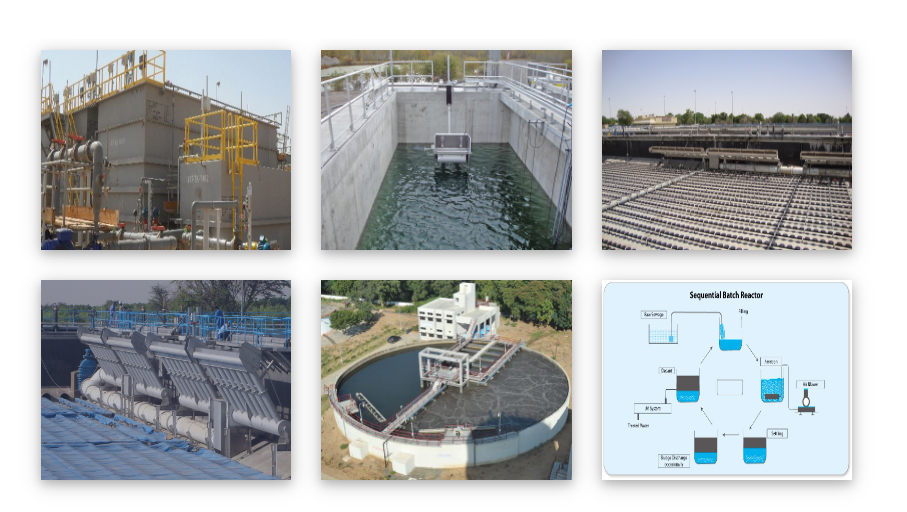
Schematic flow diagram of Sequencing Batch Reactors process is presented


The essential components of SBR’s are:

  • 1. Reactor basin

  • 2. Waste sludge draw-off mechanism

  • 3. Aeration equipment

  • 4. Effluent decanter

  • 5. Process control system


SBR STP Advantages

  • 1. The stabilized sludge is generated

  • 2. Absence of odour and corrosive gases & can remove N and P concurrent with BOD

  • 3. Less manpower is required due to automatic control, easy operation & maintenance.

  • 4. High quality effluent for reuse without separate nutrient removal and fine filtration.

  • 5. Can be expanded as a modular system.

  • 6. Capability to manage and treat variable loading conditions such as normal, dilute monsoon, diurnal and shock loads.

  • 7. Can also be used with primary clarifiers and conventional F/M ratio for bio-methanation and energy recovery.

  • 8. Separate secondary clarifiers and major return sludge pumping stations are not required, good use of common walls, simple square, rectangular or circular structures, can reduce the footprint compared to 5 conventional activated sludge process.


SBR Disadvantages

  • 1. At least semi-skilled manpower is required.

  • 2. Patented process technology and decanters defying local cannibalization

  • 3. No provision for sludge management

  • 4. No provision of primary treatment to moderate pollution load variations.

  • 5. Higher energy input if used without bio-methanation